The virtual world comes to Toronto International Film Festival
Published:
06 Aug 2026
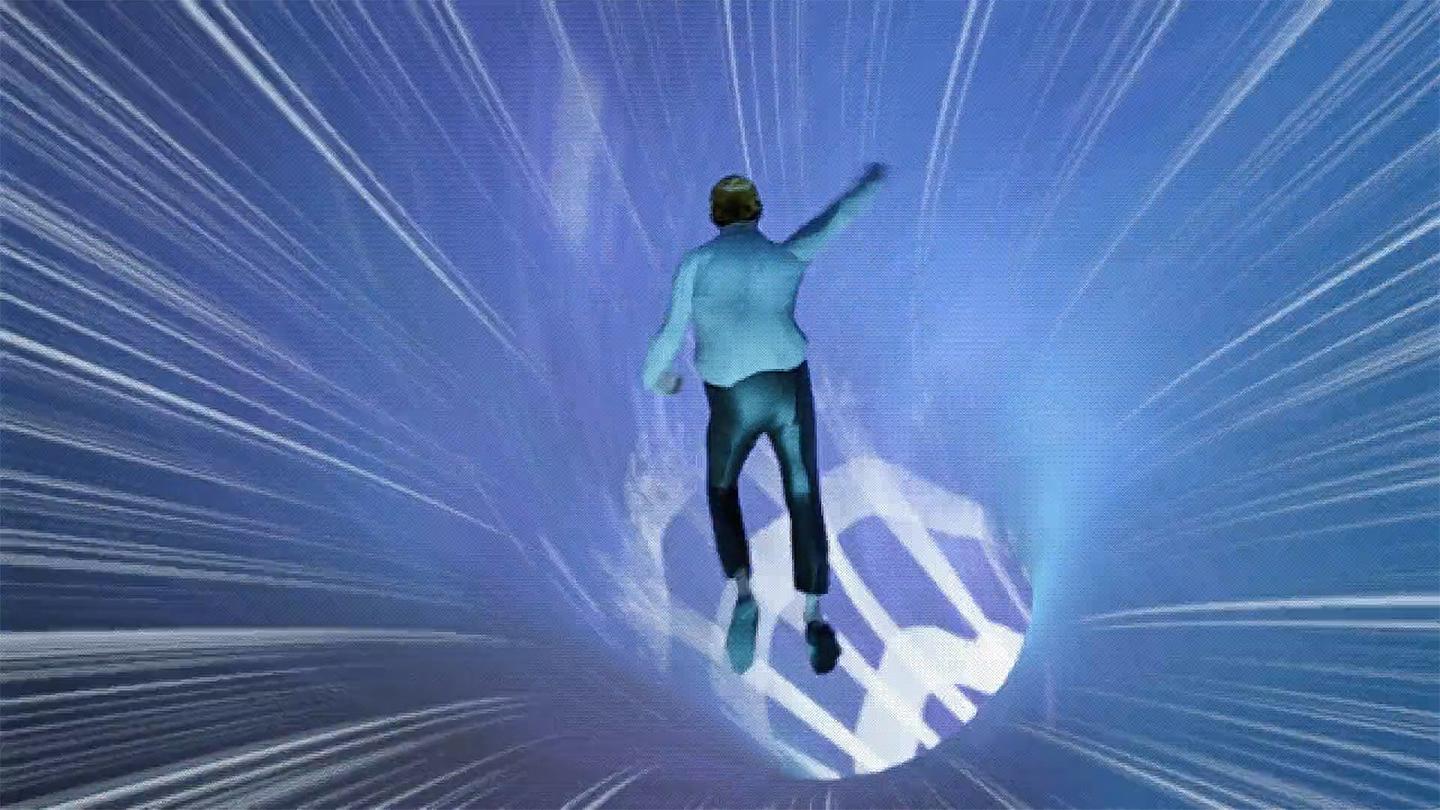
Into The Betaverse has been selected for the Toronto International Film Festival, marking a major milestone for filmmaking duo Varun Raman and Tom Hancock.
Developed through Film Hub North's Script Lab and backed by the BFI, this ambitious sci-fi blends cutting-edge motion capture with sharp observations on class, technology and virtual intimacy.
Ahead of its TIFF premiere, we spoke to the directors about their festival journey, building the Betaverse, and why the future of connection might be more complicated than it first appears.
Varun Raman and Tom Hancock are a Manchester-based writing and directing duo whose upcoming hybrid live action mocap short, Into The Betaverse (funded by BFI NETWORK) will have its World Premiere at TIFF. Their psychedelic comedy short, Man or Tree, won a Lab Competition Prize at Clermont-Ferrand, screened at the Vimeo Staff Picks 15th Anniversary Screening, and was selected by Mark Rylance to air on Sky Arts. They also developed their dark comedy feature Mano through BFI's Early Development Fund.
Into The Betaverse has been selected for Toronto – congratulations! What has your experience of the festival circuit been like so far?
Thank you, we can't wait to go. We have no idea what to expect. But from our experience of the festival circuit, we have really learned a lot about audience reactions. Fantasia in Montreal, (where our first film Transmission premiered), was a huge eye opener. We got free passes for an absolutely massive programme. It was a real submersion in genre cinema. Fantasia fans are so up for it. It's like a rock concert there. You can hear them feeling every bump, misdirection and subversion. You learn a lot about playing with expectations.
Then our no-budget short Man or Tree (which we had no expectations for) got us into festivals we had always wanted to. The biggest surprise was that it got into the Lab Competition at Clermont Ferrand, which was such a fun festival to go to - even during Covid. To top it off, we ended up winning an award. We feel this moment led to us getting BFI funding for Into The Betaverse.
Can you tell us a bit about Into The Betaverse and how it developed through our 2022 Script Lab?
The initial idea of Into The Betaverse came after seeing Mark Zuckerberg's Metaverse. It was so empty, contrived and mundane that we couldn't help but find it hilarious - despite it costing $80bn.
These virtual spaces are compromised from the start. They frame themselves as "democratising", promising to make things fairer and more accessible. But in the quest for maximising profit, corporate interests inevitably intervene by implementing tiered packages and paywalled features. If you want a sexier avatar, you will have to pay for it. As a result, the dividing class systems of our reality are transposed to these virtual spaces. This contradiction is darkly comical to us.
We also had in mind that most sci-fis heavily focus on rich, beautiful people in gilded cages. We wanted to focus on working class characters, like Gary, who have more of a reason to embrace the Betaverse. It's the perfect mix of high and low-brow.
Script Lab 2022 was fantastic. After our three paragraph pitch was accepted, we were invited to join a group of writers at Aesthetica Film Festival, which was filled with really helpful industry events and workshops. There, we honed our pitches into one-pagers, alongside loads of opportunities to swap story notes with the other writers.
This time, we wanted to crack a short with a clear three act structure and a clearly active main character. Our previous two shorts had done well but those elements had taken back seats, so now it was time to test ourselves with a traditional narrative. We knew that would be key for funding and to breach the big festivals and play in the main programmes.
Thankfully our one-pager qualified for the next Script Lab round. Two drafts of the script were written, amongst some virtual writers group notes, where we'd do a deep dive on each other's stories and provide as much feedback as we could. This was done with script editor Kate O'Hara (Duck Soup at the time) and Ben Taylor, who went on to be our BFI exec on the film.
The film raises interesting questions about intimacy in virtual worlds. What do you hope audiences take away from it?
When we started writing the idea, we just couldn't see how anything authentic could be found in the Betaverse. But as our drafts wore on, we naturally started to argue against our initial viewpoint.
Ultimately, things don't have to be so black and white. We may not understand something from the outset. We may even fear it. But we don't have to have finite views on things. Topics can remain an open conversation that always evolve. For us, this translated perfectly to the personal relationships portrayed in the film.
With shrinking opportunities for connection in the real world, places like the Betaverse could genuinely be a place where people find intimacy. It could open up possibilities for many people who don't have those options in real life - which is a great thing. In that sense, authenticity starts to take root in places it would otherwise have never stood a chance.
Into the Betaverse piloted a new approach to motion capture. Can you share more about this technique, and how it compared to using traditional mocap suits?
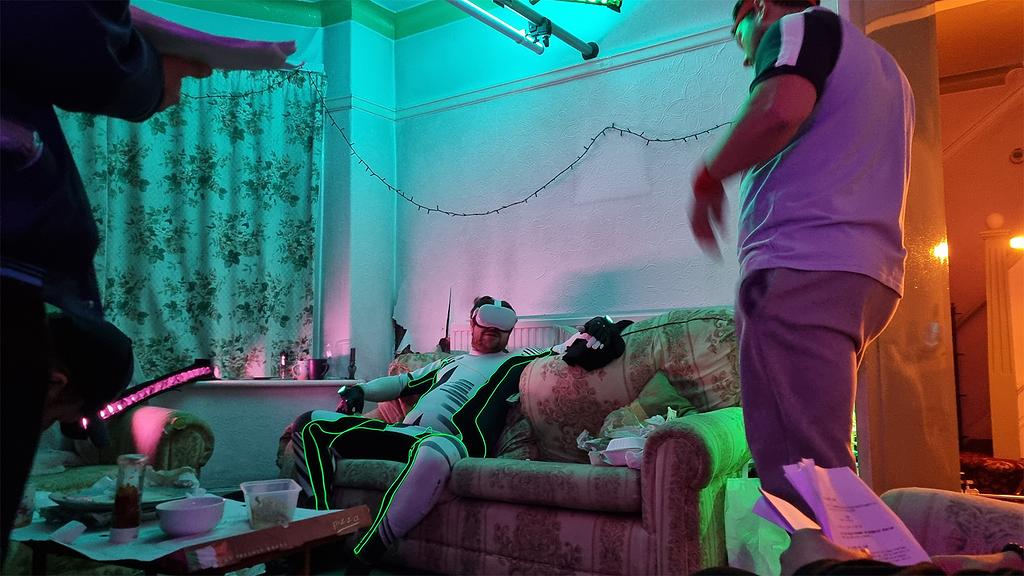
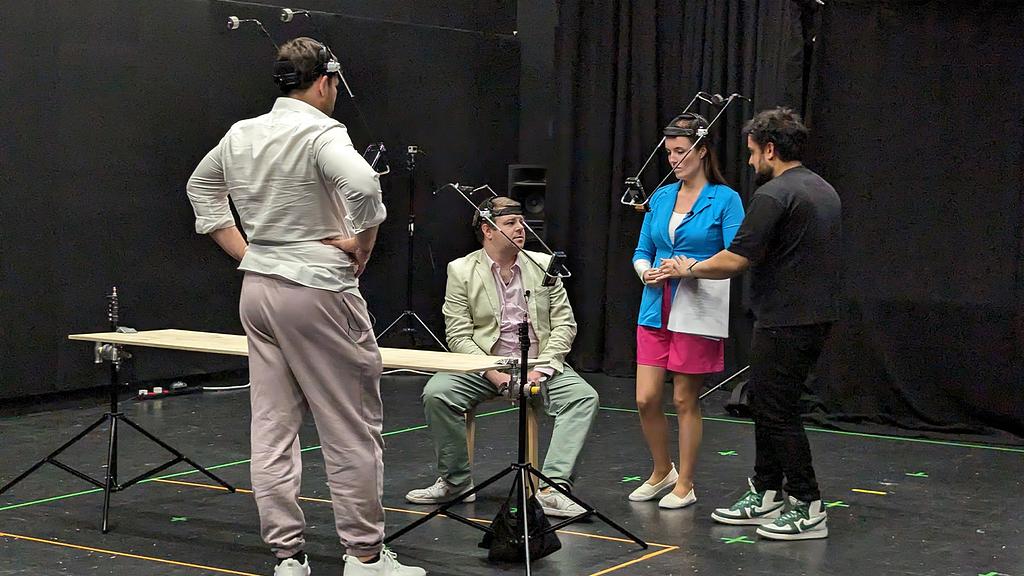
Simply put it's called 'Markerless Mocap', meaning it doesn't need the expensive motion capture suit to record their body and facial movements. Instead, we synced up eight GoPros in a circle around the performing actors and logged their physical movements, which would then render their performances as digital avatars. The actors' facial expressions were simultaneously captured with custom made iPhone headsets. Sounds easy enough?
Dan Garden, our technical director, was the colourist on our previous film Man Or Tree, and an enthusiast of the above-mentioned technology and its possibilities. Alongside him was his friend and our Art Director, Charles De La Mare who built the whole world in Blender. We don't know half of the many different methods and programs they had to research and test to make this technology work. Thankfully they only brought us the workable choices.
On set, the main issues we had were capturing the faithful body performances of more than one actor at once, especially if props were involved. It took some serious blocking. For safety, we had to divide some of the big, more chaotic scenes into sub-locations and solo performances with no props - and stitch them together afterwards. This 'stitching' amounted to a lot of extra post-production work. We knew the camera plot prior to this but had to put them all in Unreal Engine afterwards. Thankfully we had great actors and the indestructible, ever-so-patient Dan Garden.
Knowing the tech and the process was relatively untested, we built a "janky" aesthetic into the film. That's why so much of the film is set in the 'Basic' package of the Betaverse. We wanted the virtual world to seem comically disappointing and banal rather than awe-inspiring and revelatory. However, we made sure to properly capture the nuance of the actors' facial performances because that's where audiences really see the whole film.
How did you first start working together, and what makes a great creative partnership?
Our first collaboration was a Manchester University student radio show, but pretty quickly we were trading film references and learning how to write and make short films together. From there, we eventually started writing spec TV pilots and features. There are not many people who are going to back you in this world, so if you find a great collaborator, bag them.
We'd certainly like to be known as a great creative partnership one day but for now we'll tell you as much as we do know. Enjoying the escape of it is vital, because it can get pretty serious. Everyday you're analysing the human condition, which isn't all rainbows and sausages. And there's a lot of room for disagreements. We're always trying to look for comedic and entertaining angles because we believe that's how you can really resonate with wider audiences.
Broadly agreeing on what you're going for is also essential. As a partnership, we expect ourselves to go a bit further too - to challenge ourselves, each other, the audience, and the medium. On top of that, we always try to ask ourselves if it is "cinematic, entertaining and meaningful"? We have the luxury of having a constant critic in our ear, so we try to use it to our advantage.
What’s next for you both?
We have a slate of features and TV shows we're developing. Top of the list, is a Betaverse TV pilot. There is so much we couldn't fit into the short and the world is only going more and more that way.
After that, we have a genre-inflected satirical feature about algorithmic toxic masculinity, which was developed through the BFI Early Development Fund. We are going to write it and are looking to attach an exciting producer who can challenge us to make the wildest film possible.
Aside from that, we're looking to enjoy the film's festival run and see what doors open.
Into The Betaverse is showing at Toronto International Film Festival as part of their Strange Cuts programme. Watch the trailer here.