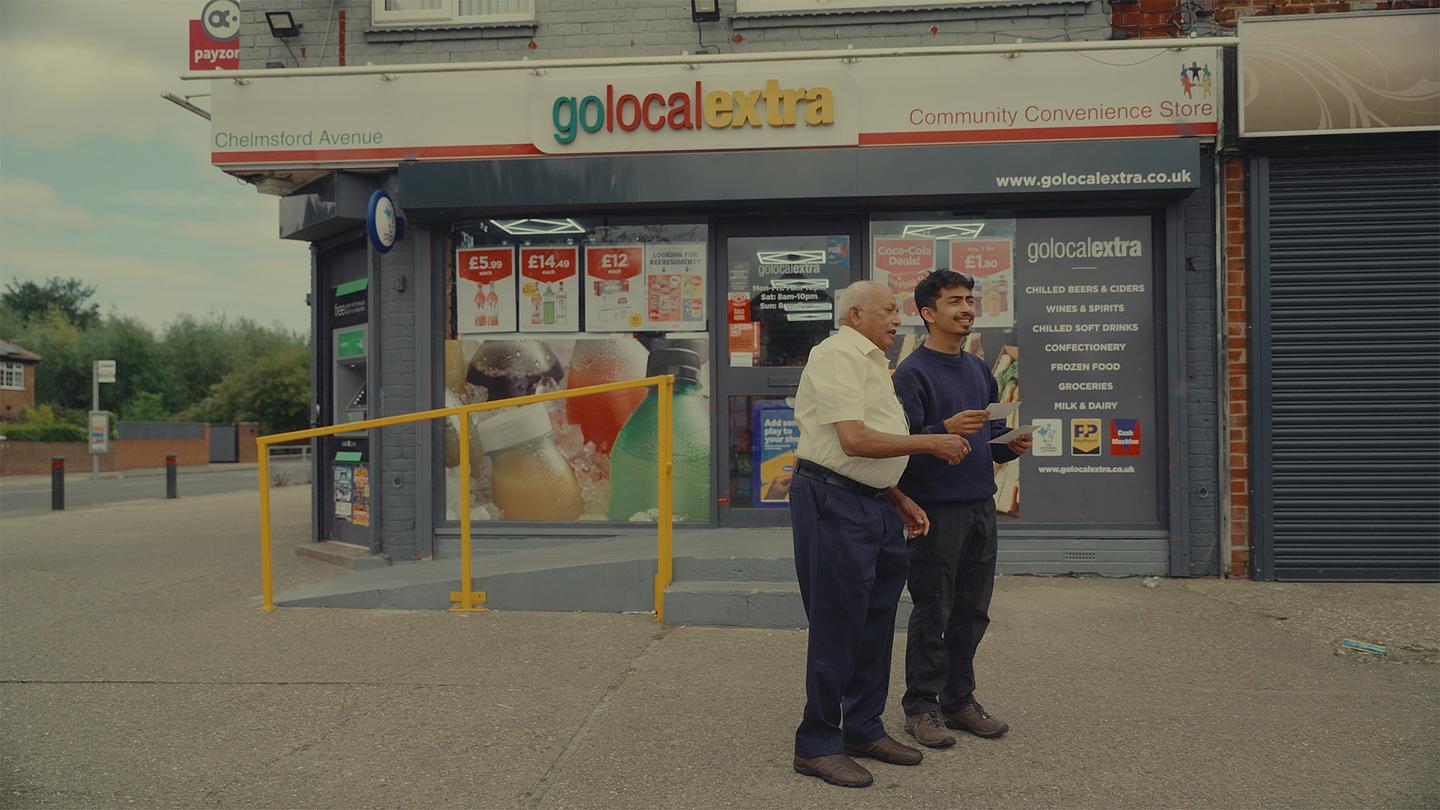
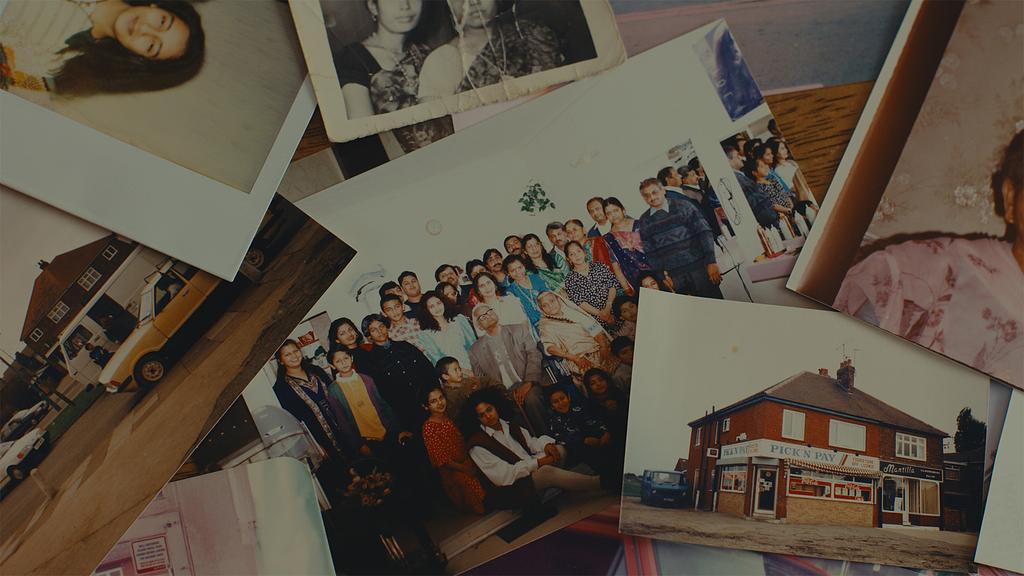
After uncovering an extraordinary story in his family archive, documentary filmmaker Darshan Gajjar shows how the most powerful stories are often the closest to home.
Back in 2025, Darshan won our DIY Filmmaking Challenge: Documentary – People and Places with Shop Dada, a moving portrait of his Granddad's life as a shopkeeper, immigrant and family man, made on shoestring budget in just a matter of days. The win earned him funding and production support from Film Hub North to develop the project into a longer film, which celebrated its world premiere at Sheffield Doc Fest this summer.
As we reflect on the legacy of our BFI Film Academy work, we caught up with the Sheffield-based filmmaker to discuss the journey of Shop Dada, what low-budget filmmaking has taught him, and the advice he'd give to the next generation of filmmakers.
Darshan Gajjar is a Sheffield-based documentary filmmaker focused on stories of migration, identity, and social justice. His work explores the lived experiences of immigrant communities, often centring themes of belonging, discrimination, and intergenerational memory. Through intimate, character-driven storytelling, he aims to challenge stereotypes and amplify voices that are often overlooked.
From a last-minute micro-short to a premiere at Sheffield DocFest, Shop Dada has had quite a journey! What has the film's evolution been like for you?
It still feels a bit surreal to think about. Shop Dada (3 minute short) actually started as a last-minute idea for the BFI Film Academy Film Hub North and Sheffield DocFest People & Places challenge. I came across a box of old MiniDV tapes my grandad had filmed over the years and realised there was something really special there. At first I thought I was making a simple family film, but the more time I spent with the archive and speaking to my family, the more I realised it wasn't just about my grandad or our shop.
It became a film about immigration, sacrifice, community and what it means to build a life somewhere new. Those themes seemed to resonate with people regardless of whether they had a similar background, which was something I never expected.
Seeing it go from an idea made in a rush to premiering the longer version at Sheffield DocFest, is something I'll never forget.
This film is deeply rooted in your own family story. Did making something so personal change your approach as a filmmaker, compared with your other work?
Definitely. Most of my work explores social issues or communities that don't often get represented, but I'm usually telling someone else's story. This was different because it was my own family.
I think it made me realise that the more personal and specific a story is, the more universal it can become. I had people come up to me after screenings who weren't South Asian and had never stepped foot in a corner shop, but they'd tell me it reminded them of their grandparents or their parents' sacrifices. That was really moving because it reminded me that emotions connect people far more than circumstances do.
It's also made me more confident in trusting stories that are close to home. Sometimes the stories we're surrounded by every day are the ones worth telling the most.
What are the biggest lessons you've learned from taking part in DIY filmmaking challenges, where you're working with tight deadlines and limited budgets?
Probably that you'll never have everything you think you need, so there's no point waiting for the perfect moment.
Those challenges force you to stop overthinking and just make decisions. You quickly realise that story matters far more than having the newest camera or the biggest crew.
I've also learned how important the people around you are. Independent filmmaking relies so much on friends, collaborators and communities who believe in what you're trying to do. None of these projects happen on your own.
Being selected as a finalist for Sheffield DocFest's Climate Spring Digital First Pitch was a significant milestone. What was that experience like, and what did you take away from it?
It was a brilliant experience and definitely pushed me outside my comfort zone. I'm much more comfortable behind a camera than standing on a stage pitching an idea to a room full of industry professionals.
The process made me think much more deeply about why I wanted to tell the story and who it was for. You're asked questions that really challenge your thinking, and I came away with a much stronger understanding of the project because of that.
Being selected as a finalist also gave me confidence. Whether you win or not, it reminds you that your ideas have value and deserve to be in those conversations. That's something I'll definitely take into future projects.
What advice would you give to young filmmakers who are just starting out in the industry?
I'd say don't wait for permission to make films. It's really easy to think you need more money, better equipment or more experience before you can start, but the truth is you'll probably always feel that way. The best thing you can do is make the film that's possible right now.
I'd also encourage people to look closer to home for stories. We often think we need to find something extraordinary, but some of the most powerful stories are already around us if we're willing to listen.
And finally, be kind to people. The film industry is incredibly collaborative, and the relationships you build are just as important as the work you make.
What's next for you?
I'm continuing to develop documentaries that focus on overlooked communities and untold stories.
One project I'm particularly excited about is a feature documentary exploring the history and ongoing fight for equal rights for Gurkha veterans and their families. I'm also developing a film about the legacy of Yemeni steelworkers in Sheffield, whose contributions to the city's history have often been overlooked.
At the heart of all my work is the same aim: telling stories that help people better understand each other. Whether it's about my own family or a community I've spent years getting to know, those are the stories I want to keep making.
Shop Dada was funded through our Film Hub North x Sheffield Doc/Fest DIY Filmmaking Challenge Fund 2025, as part of BFI Film Academy 2023-26.