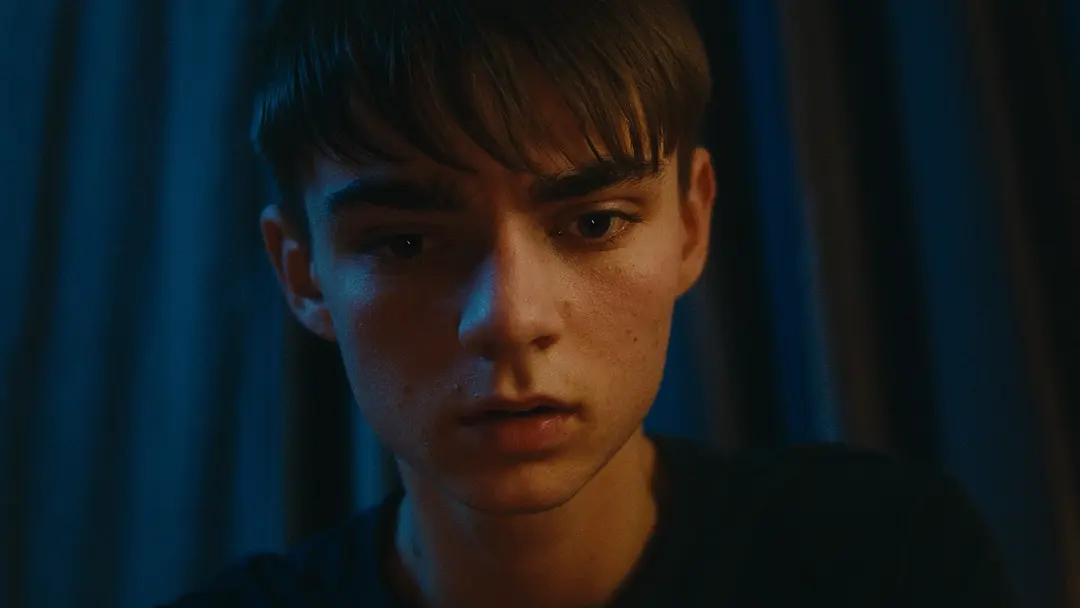
A deep dive into Vestige’s uncanny world: the short’s filmmakers discuss building creative trust, and the practical choices that helped their film break beyond the festival circuit and onto Disney+.
With
Vestige now streaming on Disney+, the short film has leapt from the festival circuit to a global audience. We sat down with director/co-writer
Joseph Simmons and producer
Lewis Coates to talk about the film’s journey, how their collaboration began, and their hard-won advice for filmmakers navigating the horror genre, partnerships, and the
BFI NETWORK Short Film Fund.
Joseph Simmons is a Yorkshire-based writer and director that makes rich character-lead genre films combining his interests in philosophy and psychology to explore authentic human stories. He has directed a number of short films and music videos that have screened internationally at Bafta and BIFA recognised film festivals, including Aesthetica, Foyle Film Festival, Bolton Film Festival, Leeds International Film Festival and many more. He holds a MA in Filmmaking from the Northern Film School and loves making work that showcases the region he is from.
Lewis Coates is an award-winning producer and founder of Static Flow Productions, based between Yorkshire and London, whose genre short films have screened at SXSW London, London Film Festival, BFI Flare Festival, Encounters, HollyShorts and more. He produces bold, dramatic stories that draw on genre and magical realism, grounded in reality and shaped by a distinct perspective on the world today. He is a current Bafta Connect member, BIFA voter and was selected for BFI’s Creative Producer School, Screen Yorkshire’s Flex Talent Programme and CreativeUK’s Scaling Up scheme. Three of his short films have recently gained distribution, Vestige and Saint Vassily on Disney Plus; and Solers United on Channel 4.
Vestige is now streaming on Disney+, congratulations! How did the film come to the attention of this major streaming platform, and what does it mean to you to have your short reaching such a wide audience?
Lewis: Thank you! It honestly still feels a bit surreal. We shot the film in 2022 and had a solid festival run. We were lucky enough to premiere at Frightfest, we had our Northern premiere at Bolton Film Festival and it even reached a few genre fests in the USA too. This gave it the chance to be seen by programmers and curators, which caught the attention of Salaud Morisset, a distributor based in Paris, who were on the lookout for distinctive short-form work for their slate. They work closely with Disney+ and thought it would be a great fit for their platform, which was incredibly affirming - especially when we heard the Disney team agreed and were considering our film alongside feature films from filmmakers we really admire.
I was actually on holiday in Spain when we got the news and had to remotely prep a lot of post production deliverables whilst I was out of office. Thank goodness I took my laptop and hard drive with me!
Short films so often just live within festivals or filmmaker-centric platforms, so to have this story reach such a wide audience feels incredibly meaningful, especially as we are continuing to develop the project further.
Where does Vestige sit within your wider body of work as a director? Are there themes, ideas, or influences that recur in your filmmaking?
Joe: I think Vestige is a very good indication of the type of work I find myself drawn to. I did a philosophy degree, so I'm naturally drawn to characters with their own sense of reality and perception - stories where the audience wants to discover the truth alongside them. I think the mystery genre ties together science fiction, horror, and psychological thriller in my body of work, and that's really the sphere I want to continue developing in.
There are definitely recurring themes of obsession, drive, and search for truth and meaning that interest me, as well as flawed characters and their particular states of mind when it comes to what they perceive as reality. So yes, there's definitely a strong through-line between Vestige and my other work.
What advice would you give to filmmakers directing horror shorts, particularly those who might be daunted by the genre or budget constraints?
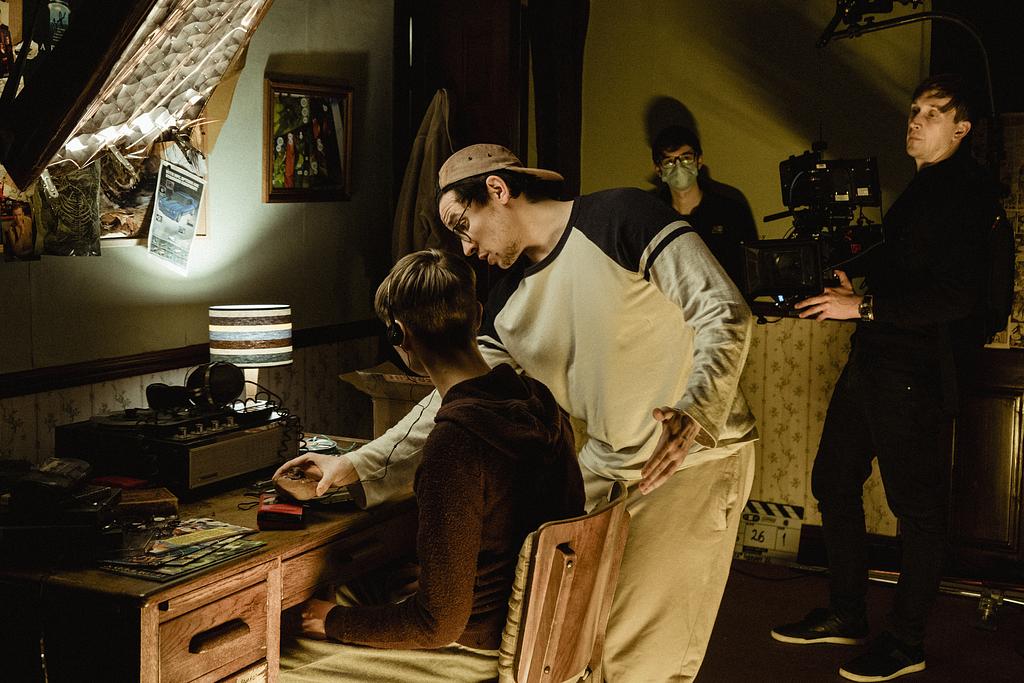
Joe: For filmmakers looking to make horror shorts, as it is with all art-making, I'd say it's still about finding something personal within the work that genuinely interests you. I'm often drawn to questions and novel ideas that offer characters interesting places and worlds to explore. So I think it comes down to questioning what the horror is - or what feeling you want your audience to experience - and why that's something you find personally compelling.
When it comes to genre or budget constraints, I still see filmmaking as a process of finding your own answers and working within your restrictions to come up with personal creative solutions. That's something you can't get wrong! It's an iterative process of figuring out how to say what you want to say, and that personal connection to the material will always shine through regardless of budget.
Filmmakers often ask us how to find the right producer. How did the two of you first start working together, and what made the collaboration click?
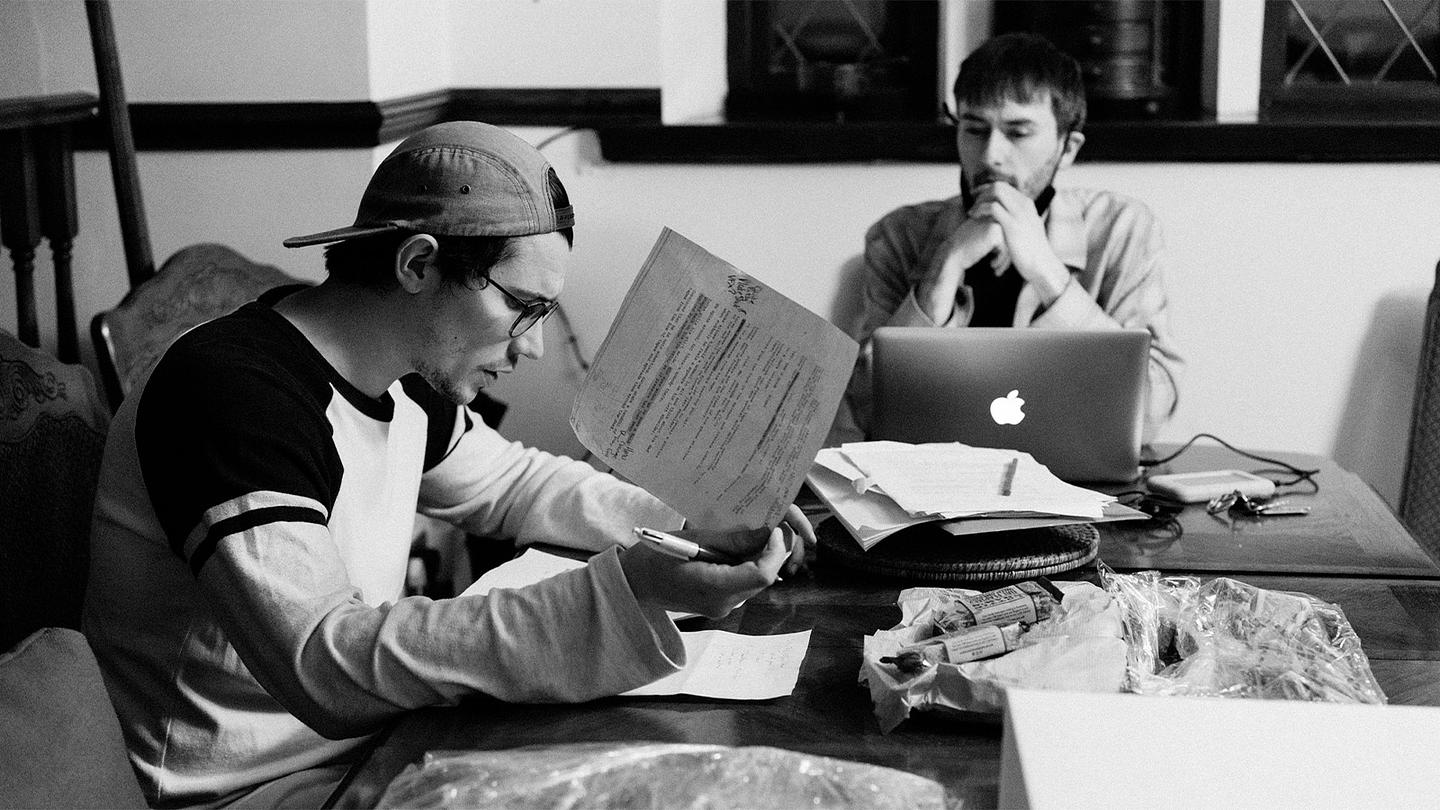
Joe: Finding a producer is really hard. You want to find somebody who truly understands your disposition, your aesthetics, and what you're trying to say with the work you're making.
I think right from the start, Lewis had this unique combination of qualities. He's been a successful director in his own right, so he understands the creative process from that perspective. He's also a brilliant problem solver, calm under pressure, and has gone through programs like the BFI Producer Academy, so he's been trained to work as a producer and has that experience. But crucially, he's also interested in the same subject matter, so there's a natural alignment there.
From a personal perspective, it's been really lovely working with Lewis because we get on as friends. I think it's about understanding what you can do for each other to nurture the relationship and maintain good communication. We talk regularly, and the aim is to build this relationship into something that hopefully continues across more projects in the future.
Lewis: I think it really helps if a collaboration starts in person, which can be harder in the age of Zoom and social media, but meeting for a coffee, or connecting at a festival or networking event, gives you a much clearer sense of who someone is and how you might work together. That informal, human connection is important for building trust and mutual respect. Films are long-term commitments, often stretching over years, so knowing you can navigate inevitable challenges together really matters. With Joe, I was already familiar with his short films and was drawn to his philosophical way of looking at the world. When he shared the script, the themes and tone immediately resonated with me, and I could clearly see how I could contribute creatively and help elevate the project. That shared vision is what made the collaboration click.
What was your experience of applying to the BFI Network Short Film Fund like? Do you have any practical tips for filmmakers going through the application process?
Lewis: I think applying to any fund can be daunting - there’s a lot of information to pull together, and the lead-up to the deadline can be very high pressure. Though I think it's such a valuable process, regardless of the outcome. Answering the application questions forces you to view your project through a funding lens, thinking about your audience, streamlining your vision, often revealing areas that need further clarity or development.
I had probably applied two or three times with different projects before I was successful with Vestige, so I had started to understand the types of questions the BFI asks and how to tailor a project in response. One of the biggest takeaways for me is the importance of a pitch deck that fully reflects the world of the film. I imagine that the deck is a storytelling vehicle itself, and finding ways to immerse your reader in your world and take them on a journey. It should showcase the tone, visual language, and emotional intent of the project through carefully chosen imagery, colour, and design. If you can get your reader to emotionally invest in what you want to make, I think there is a higher chance of success.
Practically, it’s important to submit a budget that feels realistic for both the project and your level of experience, particularly as competition increases at the higher budget levels. If a film includes elements that may be perceived as challenging, or anything that BFI may see as a challenge, it’s worth addressing these directly. A dedicated page in your deck showing that you understand the challenges, you have a plan for how to tackle them and, if needed, you will work with partners who have undertaken these before. This can help build confidence in the project.
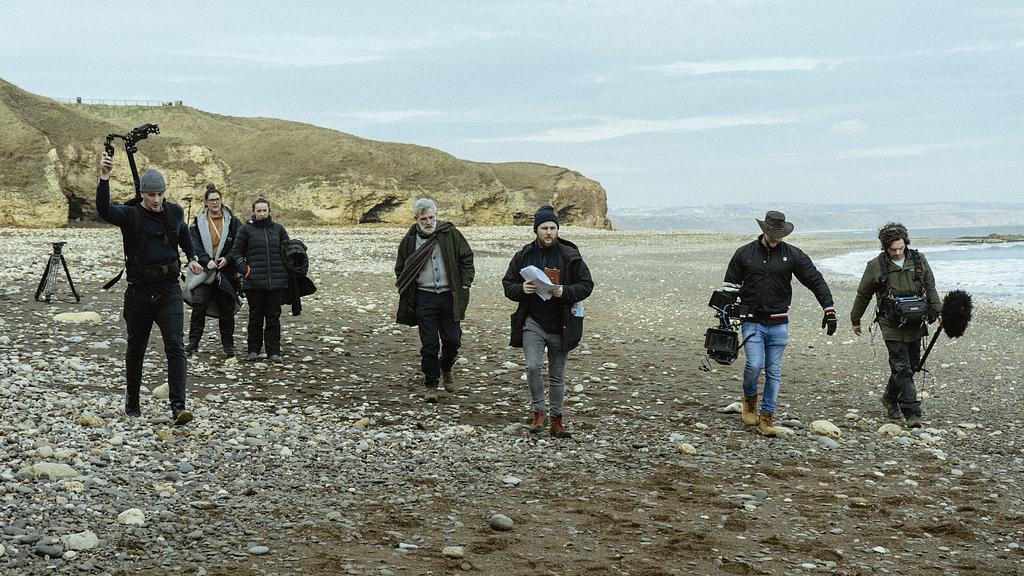
For Vestige, we were filming on a beach and in sea caves at high risk of tides, working with a young actor and creating some scenes of VFX. On paper, these were all risky things to undertake without the right experience or plan, so we made sure to make this known in our application and explain that we knew how to achieve these successfully.
Lewis took part in our Producer Lab back in 2020 – are there any lessons or insights from the programme that still influence how you work today?
Lewis: I learnt a lot of essential skills from the BFI Creative Producer Lab, including budgeting, scheduling and creating a finance plan. My biggest learning was how important script development is and how to work more effectively with writers to ask the right questions to encourage deeper exploration of character, tone, and intention. That process remains central to how I assess projects today, ensuring every page is doing as much work as possible and that the film fully realises the writer’s vision.
I think it's a creative producer's job to understand what the writer wants to make and ensuring the final piece lives up to that, but also have one eye on what a funder might want, what a distributor might want and what an audience may want to watch, and trying to marry those up in a compelling way.
Another key insight was the importance of building a production crew around your creative team that compliments their personality and communication style. Creating the right conditions for creatives do their best work, understanding people’s working dynamics pairing them with people that will fill in gaps in their knowledge has become a core part of how I produce. The last thing you want on-set is any disagreements or toxic behaviour, so ensuring everyone is aligned in advance and that all these different personalities can come together to create something beautiful.
Finally, what’s next for Vestige and you both as filmmakers?
Joe: Vestige's journey is hopefully just beginning. Over the last couple of years, we've been developing a feature script based on the short, and we're really proud of it. We think it has a unique take on where the story goes from here, and we love that world. We're actively looking for production partners and funders to help bring the film to life.
As filmmakers, speaking for myself - and I know Lewis is doing brilliant things and has made some amazing work of his own - I just have this drive to keep making. It's harder and harder in the current filmmaking landscape to remain creative and curious, so I want to make sure I continue growing my craft. I'm taking part in a few schemes this year, which will be great for my development as a director. I really want to stay on this path I've set for myself and continue to grow as a creative.
Lewis: Developing the feature version of Vestige is a major focus this year, and we’ve already had some really encouraging conversations with executive producers and financiers. Stepping into the feature space brings a lot of new considerations around financing, distribution, and audience, but that learning curve is something I genuinely enjoy. Understanding how those elements connect is key to building a sustainable project.
Alongside that, another short film I produced, Solers United, is currently screening on Channel 4 and is also being developed into a feature. At this point, I’m starting to build on the creative IP from the shorts I’ve made to think more strategically about long-term development - turning producing into a career rather than just a passion project.